
Battery & inverter
Store your daytime sunshine for the evening, keep essentials running through outages and get the most out of the inverter at the heart of your system — installed, diagnosed and repaired by power-electronics specialists.
The hardest-working parts
The inverter converts every unit your panels produce, switches thousands of times a second and runs hot for years. Batteries cycle daily and are sensitive to temperature, charge settings and depth of discharge. Between them they account for most of the faults we are called to — and most of the avoidable losses.
Our specialists install, configure and repair both, so the energy your roof generates actually reaches your sockets when you need it.
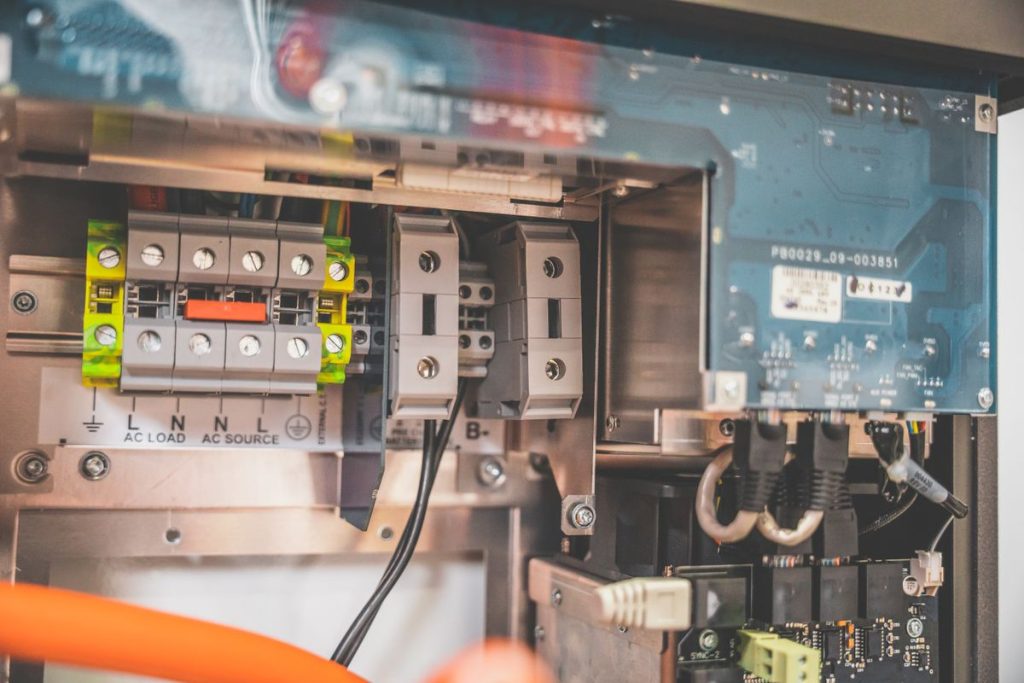
Inverter services
String, hybrid and off-grid inverters — wall-mounted at home or in a commercial plant room.
We read fault logs, test insulation resistance and grid parameters to find why the inverter is tripping or derating.
Fan replacement, cleaning of heat sinks and filters, terminal re-torquing and board-level repairs where economical.
When repair is not worthwhile, we match a compatible inverter to your array and handle warranty claims.
Grid profiles, export limits, battery charge parameters and firmware updates configured correctly.
Battery storage
Both have a place. The right choice depends on how often you cycle the battery, your budget and how much space and maintenance you can accept.
Our usual recommendation
The modern standard for solar storage. Higher upfront cost, but far more usable capacity and cycles over its life — usually the lower cost per stored unit.
Strengths
Trade-offs
Budget or legacy systems
Familiar and lower upfront cost, still common in older backup and off-grid systems. Lifespan depends heavily on how deeply and how often it is discharged.
Strengths
Trade-offs
Sizing storage properly
An undersized battery runs flat early and wears out fast; an oversized one never pays for itself. We work through four questions with you before recommending capacity.
We list essential circuits — lights, fans, router, refrigerator, pumps or critical equipment — and measure their actual power draw rather than estimating from labels.
Typical outage length and evening usage decide the energy the battery must store. We add margin so the battery is not routinely drained to its limits.
There is no point in a battery your panels cannot refill. We check daytime surplus across seasons and, if needed, recommend adding panels.
Hybrid inverter capacity, battery voltage and communication compatibility determine what you can install now and add later without replacing equipment.
Inverter warning signs
Inverters usually give warnings before they fail completely. Catching them early avoids days without solar.
Questions, answered
Practical answers about storage, backup and inverter care.
Often yes, either by replacing the inverter with a hybrid model or adding an AC-coupled battery system. We check your current inverter, wiring and available surplus before recommending the simplest option.
Quality lithium iron phosphate batteries are typically rated for thousands of cycles and often last ten years or more with correct settings. Lead-acid batteries usually need replacing sooner, especially if deeply discharged.
Most inverters last roughly ten to fifteen years, depending on quality, ventilation and operating temperature. Good airflow and periodic servicing make a real difference.
It can, but powering essential circuits only is usually more cost-effective. We help you choose which loads to back up and size the system accordingly.
Common causes are high grid voltage, overheating, export limits set in the configuration or an undersized inverter. A diagnostic visit identifies which one applies.
Lithium batteries need very little beyond keeping them cool and checking settings and connections. Flooded lead-acid batteries need regular electrolyte checks, cleaning and ventilation.
Backup and reliability
Tell us about your current system or what you want to back up. We will recommend a storage or inverter solution that fits.